A Context Note: I’ve been preparing to work on the crucial science section of Volume 2, and to give myself plenty of time to do it right. For now I am posting some historical transcripts and writing to give you a glimpse of the early days of this work. Where did psychotopology come from? How did I find my way to this work I am sharing with you here today in 2026?
This series of posts offers the complete interactive transcript of my first intensive session of this work with myself on April 4, 1995. With the exception of my birth, this was probably the most significant day of my life.
The Setup
At the age of 27, struggling with cycles of intense mood, both high and low, and after reading a book about people experiencing such cycles (Moodswing by Ronald Fieve), I sought psychiatric help and was diagnosed with bipolar disorder. The diagnosis served as a wake-up call. Bipolar disorder was then, and is still today generally considered a permanent condition manageable only through medication and therapeutic support primarily focused on making sure you stay on the meds. Treatment failure typically results in lives spinning farther and farther out of control, often into suicide or serious health issues in addition to general life chaos. Overall, including both those receiving “successful” treatment and not, the average life expectancy for someone with a bipolar diagnosis runs 12 to 13 years less than the broader population.
I chose not to accept the medication or therapy, and committed myself to digging into the actual experience of these intense mood cycles, seeking to understand from the inside what drove them in hopes that I could escape their control over my life. My choice was based in part on having studied the brain with an intention to become a neuroscientist, and understanding how shallow the science was supporting the diagnosis and the prescription.
My decision was also supported by intuition. I was very rooted in the experience of feeling, curious about consciousness, and it felt very much to me like there was some kind of semi-predictable, psycho-emotional mechanism driving my cycles. It was like I could feel the gears of some “bipolar” machine turning, and I wanted to find a way to take control of it.
April 4, 1995, 4:00 AM
I was awakened by a disturbing dream, paralyzed by fear.
At that time, I was 35, living on the edge as a freelance advertising copywriter with lots of free time and just enough money to live on, feeling secure enough but also desperately trying to find my way.
Nine months before this, I had experienced the first shift that opened the door to fieldwork — the reversal of a downward pull in a state of depression and the simultaneous dramatic shift in mood that I’ve described elsewhere. Since then, I had gradually assembled my set of virtual materiality questions and applied them wherever I could. Time and again, I would bring my awareness to some inner turmoil, discern its virtual material properties, interact with it to invite a shift, and experience clear relief. It was reliable, and I was hopeful about moving forward in centering this work as my livelihood and my contribution to the world.
Over these nine months, my life had changed dramatically as I moved from Kalispell, Montana to Seattle, Washington. My move to Seattle was motivated by a desire to apply this work in theater and dance performance, artfully sculpting what I described as emotional landscapes on stage. In the month before this dream showed up, I had been working with Anne, a professional dancer who had moved from New York City. We worked together on crafting a solo performance driven by shifts in feeling on the inside, where the body moved spontaneously through a sculpted arc of inner states rather than being controlled by a preconceived idea of exactly what the body itself was supposed to be doing in each moment. The effect was so much more alive and engaging than how she was accustomed to doing her dance, both for the audience and for her. Her solo performance had happened in March, and it was compelling and powerful. I saw a lot of potential for this work.
I had also been sharing the mapping work with people close to me, facilitating their explorations and witnessing its power to transform deeply reactive feeling states. I really didn’t understand what I had discovered, but I was excited about the possibilities.
One thing I was especially curious about and wanting to investigate had arisen in my work with Anne. In shaping a flow from the state of fear to something she called “stand tall,” we had discovered the coexistence of two distinct “parts” of her that could not be combined and needed to go through the flow in parallel. This was a very distinct and indisputable emergence of two feeling-state entities that were completely separate from one another yet highly interconnected. The question took me by storm: How many of these “parts” do we have inside of us? I wanted to push the edge and start looking for more.
At the same time, overall, my inner life was still in tumult, with ups and downs and all-arounds. This discovery I had made, this work I was trying to bring forth, was invisible to the rest of the world, and I was on my own in every way, with nobody to lean on, no place to go for support. In this, I was still occasionally susceptible to slipping into hypo-manic highs, where I functioned well enough but leaned toward impulsive grandiosity. It was my way of compensating. And those highs still tended to flip into states of intractable despair when I ran into a wall and just wanted to give up.
The dream I unpack in this transcript was set up by some emotional challenges the week before. To bury the distress, I was indulging in grandiose fantasies about the power of this work to change the world.
The week was marked by a watershed moment. I was sitting in my apartment overlooking Elliott Bay, looking out the window and calling up that invincible state of being I had relied on since Edinburgh to bail me out of pain and carry me to glory. During a visit to the bathroom, by chance I happened to look into the mirror and focus on my own eyes. The wildness I saw frightened me, startling me instantly back to sobriety.
Normally, in the midst of my hypo-manic episodes, I was fully immersed in the grandiosity. But in that moment, some part of me that had come online in the process of doing my mapping over the recent months had shown up as a witness, as if standing to one side and looking at this manic side of me from a different place. My “self” jumped out of the manic dude and into the witness.
Seeing myself in this way was troubling, to say the least. It made me ask the question once again about what the hell drove this pattern in my life, and I still had no good answers. I vowed (grandiosely — ha!) to bring an end to these unstable swings as soon as possible.
Feeling an opportunity on this early morning a few days later, I got up from the dream and decided to work with the fear. It was intense, and I had no way to make sense of it at this point, but I trusted my method enough to give it a go. I had learned that the realm of feeling occupies a large, complex territory. But now it was entirely possible for me to map it, rigorously, with the new tools I had discovered. I did not know the role this fear played, but I trusted that it had some role in the larger pattern of my life, and I wanted to bring it out into the open.
On this morning, I sensed this excursion would be a major project. The dream felt complex, and I was feeling a lot. Not just the fear.
How to manage this complexity? Again, I was on my own. Nobody else knew my method, so it was entirely up to me to lead my own self through it. I decided to explicitly split the facilitator role from the explorer role by typing out a dialog between the two.
First I would put on my facilitator hat, typing my questions and engagement under the MIND label. Then, I would get out of the way, put on my explorer hat, and respond under the EMOTION label. As I went through each exchange, I gave myself time to fully inhabit each role in turn.
This worked extremely well, and I spent a good twelve hours on this very significant day going back and forth between my facilitator self who knew pretty well how to lead this process and my explorer self who was willing to surrender himself to it. A fortunate by-product of this technique is that I preserved a detailed record of the process, the “transcript” which I get to share with you here in its entirety.
Let me start at the very beginning…
Transcript (beginning):
MIND: Tell me briefly about your dream, and about the general feeling you’ve been having over the past day and a half.
EMOTION: I’ve been feeling this low-level panic, like something big is going to run me down and it’s in my face and I can’t get out of the way. It has to do with the work taking off and becoming real, and Cathy’s work on Sunday night really crystallized that reality. That’s when the fear started, with a need to be comforted. I noticed old feelings of needing sex happening yesterday, and knew there was fear present because of them.
Cathy and I talked last night, and I mentioned the thought that “the ball is already rolling, and can’t be stopped.” She probed that phrase, and I had a sense of a massive ball that was right in front of me and rolling into me, that was going to crush me.
The dream just tonight (it’s about 4am on Tuesday morning) was about me being in a large mansion that belonged to someone else. I had been given a room or suite of rooms on the top floor at the beginning of a day, and one thing I did was play with the light switches at the beginning. They didn’t seem to work exactly according to logic, with each switch operating lights in illogical places, but they did work.
I was working in this house. Late in the evening I decided to go home, I think it was a few minutes after 6pm and I had been just staring out the window for about a half hour with nothing to do. My shift was over at 6. On my way up the stairs I passed this guy who was doing something strange with a wall socket. I didn’t understand.
He was like a David Copperfield, dark, good looking, mysterious. I have a sense of another version of myself. I continued upstairs and discovered that none of the light switches now worked. That and it was dark, and I had a sense that the switches had been disabled by someone who was perhaps the true owner of the house (whom I hadn’t met) and who had some secret plan to harm me. I wondered if the man on the stairs had something to do with this. I was frightened, and woke up feeling the fear as something very big, unknown.
After getting up, the fear continued, or rather, I allowed the fear to continue. The darkness was menacing, water running from the tap seemed sinister, and every turn I made sent chills up the back of my neck. Very disconcerting.
MIND: So what are you feeling now?
EMOTION: The fear.
MIND: Where is that fear located in your body?
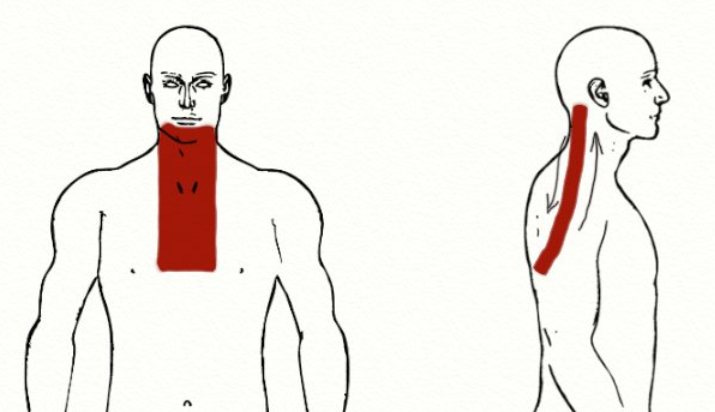
EMOTION: I think there’s a part of it that runs up my spine, from about the bottom of my shoulder blades up my neck to the base of my skull.
I want to pause here to call attention to three things showing up.
First, my question about location asks where the fear is “located in your body.” At this point in the development of the work, I was still working under the assumption that these feeling states I was working with were primarily somatically based, and that the place to look for the experience of the state was “in your body.” We will see later in this journey how that expectation was shattered.
Second, my answer to the question of location begins with, “I think there’s a part of it that…” Judging from the wording I used, it seems possible that I am identifying not the whole fear, but just “a part” of it that “runs up my spine.” This suggests right at the start that this fear experience is somewhat complex. We will see just how complex as we proceed into the next installment.
So third, I want to make sure you noticed what happened there after I described the dream. I then described my experience just being in my apartment after waking up, and how creepy things felt, where “every turn I made sent chills up the back of my neck.” Then, I asked the simple question, “What are you feeling?” And it turns out the experience of the fear was actually occupying the space of my upper spine, into the neck. Often, this is the case, where somatic sensation (e.g. “chills”) are very interconnected with the presence of the affect field of a related feeling state. But let me also be very clear, this is not always how things show up, as you will see soon enough.
Let’s move forward and find out what we can learn about this fear.
Transcript (continued):
MIND: Do you have a sense of how much space that fear takes up — is it very big around or smaller, cylindrical or ribbon-like?
EMOTION: It’s like a flattened cylinder about five or six inches wide and less than an inch thick.
MIND: If there were movement inside this cylinder, what kind of movement would that be?
EMOTION: I have a sense of upward movement — that’s what seems to create the chills. But it’s an arching upward movement, pulling the fear into a backwards arch, pulling my head back.
MIND: If this fear cylinder had a color, if you could see it, what color would it be?
EMOTION: Seems like a dark maroon. More — I have a sense of it being like a solid, and smooth and shiny on the outside. Also, it seems like the arching is caused by a downward movement on the back surface, thin, at the center, pulling the whole thing into a backwards arch.
MIND: If there were a sound associated with this, what might it be?
OK, let’s take a pause here. We’re just getting started, but I want to note a few things.
First, I invite you to notice what just happened. In the course of five brief exchanges, we went from “the fear” to a very precise description of this thing in my body. But these exchanges did not happen as quickly as the dialog might imply. At every round, I would step out of my inner world after capturing my notes about my experience, put on my facilitator hat, wonder about what made sense to ask next, write that out, take off my facilitator hat, immerse myself in feeling again, read that question, and settle in to explore what the answer to it might be. Probably at least a few minutes for every cycle.
Still, the relatively efficient emergence of a very tangible felt image of something carrying thingness qualities from this otherwise nebulous space of feeling is remarkable. These questions I had developed were powerful.
I want to note also that it is very clear already in this mapping that we have gone beyond somatic sensation. Yes, there is an overlap, or an interaction of some kind, between the upward pull and the experience of “chills” up my neck. But in fleshing out the actual experience of the feeling, we get into virtual material properties that have nothing to do with the body. Nevertheless, even in their non-overlap with the structures of the soma, my experience of these properties is no less “real” to me.
One more thing I would like to note. This was still early in my development of the method. I was flying by the seat of my pants here. The form of the questions had not been fully refined, the order in which I asked them was purely intuitive, and I was entering a territory — that of a complex dream — that was unprecedented for me. I did not know what to expect.
At the same time, as you will see, what I had was plenty good enough. It didn’t have to be perfect to get results. Overall, my attitude was the core strength that carried this process. I trusted that this territory was real, that it was explorable, and that the tools I had were sufficient to explore it. And I believed that exploring it was important and that what I might find had the potential to be significant for me.
That was enough.
At this stage in the development of the work, I had not begun the practice of drawing these descriptions of states. Looking back, I’d say I was a bit slow on the uptake for this as it took me probably another year before I came up with the idea for drawing. So the drawing I share below was not done in the mapping process, but here, today, based entirely on the descriptions in the transcript. If it had been done in the moment, the drawing itself would have been an extension of the observation process and may have revealed still more detail.
But again, even without that, what I had was enough, as you will see.